
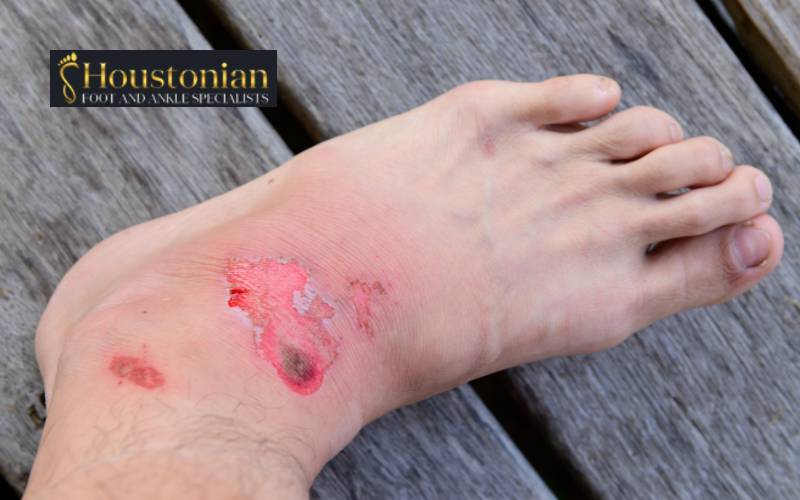
When to See a Wound Care Specialist
Non-Healing Foot Wounds Should Not Be Ignored : Signs You Need Professional Wound Care
A small cut, blister, scrape, or sore on the foot may initially seem harmless. Sometimes it heals with basic care. But when a wound remains open, becomes increasingly red or swollen, develops drainage, or simply does not appear to be improving, it deserves professional attention.
This is particularly important when the wound affects the foot or lower leg.
People with diabetes, neuropathy, circulation problems, previous ulcers, or certain other health conditions may be at greater risk of developing foot wounds or experiencing delayed healing. Diabetes-related nerve damage can reduce sensation, making it possible to have an injury without noticing it immediately. Reduced blood flow can also make it harder for some wounds to heal normally.
If you are searching for a wound care specialist in Houston, knowing the warning signs of a non-healing wound can help you recognize when professional evaluation may be appropriate.
Houstonian Foot & Ankle Specialists provides podiatric care for foot and ankle conditions, including diabetic foot care, neuropathy, wound care, and ulcers.
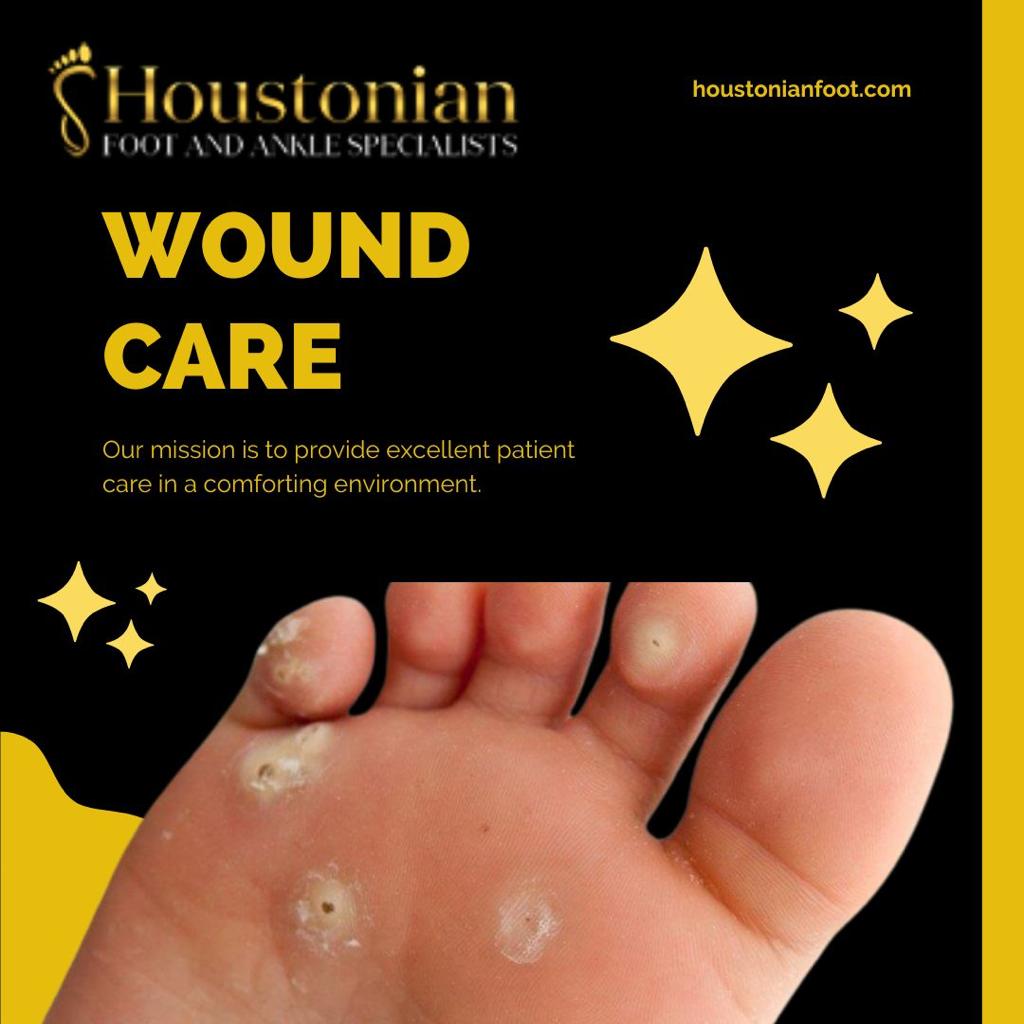
What Is a Non-Healing Foot Wound?
A non-healing wound is an injury or open area of skin that does not appear to be progressing through normal healing.
Foot wounds may develop for many reasons, including:
- Cuts and scrapes
- Blisters
- Repeated friction from footwear
- Pressure points
- Diabetic foot ulcers
- Neuropathy
- Traumatic injuries
- Burns
- Infections
- Surgical wounds
- Skin breakdown
- Circulation-related problems
The appearance of a wound does not always tell you why it developed or why it is taking longer than expected to heal.
For example, a person with diabetic neuropathy may not feel a blister or small cut because sensation in the feet has been reduced. The person may continue walking on the affected area, creating additional pressure and irritation. NIDDK notes that diabetes-related nerve damage can make it difficult to notice injuries such as blisters and sores.
That is one reason early attention to foot problems matters.
10 Signs That a Foot Wound May Need Professional Care
Knowing what to look for can make it easier to recognize a potentially concerning wound.
- The Wound Is Not Getting Better
A wound that remains open without showing signs of improvement should be evaluated, particularly if you have diabetes or another condition that may affect healing.
NIDDK advises people with diabetes to contact their healthcare provider if a cut, blister, or bruise on the foot does not begin to heal after a few days.
Do not assume that a wound will eventually heal simply because it is small.
- Redness Is Spreading Around the Wound
Some redness can occur around an injury, but increasing or spreading redness can be a sign that the area needs medical attention.
Pay attention to changes in the skin surrounding the wound, particularly when redness occurs together with warmth, swelling, pain, or drainage.
These changes can be associated with infection and should be evaluated by a healthcare professional.
- The Area Becomes Swollen or Warm
Increasing warmth or swelling around a wound can be another warning sign.
This is particularly important for people with diabetes because nerve damage may reduce the ability to feel pain or other changes normally.
The CDC recommends that people with diabetes check their feet every day for changes such as redness, swelling, sores, and blisters.
- There Is Drainage or an Unusual Odor
Fluid or drainage from an open wound can have different causes, but pus-like drainage or an unpleasant odor may indicate that the wound requires prompt medical evaluation.
A wound that is draining should not simply be covered and ignored.
A healthcare professional can determine whether infection or another problem may be affecting the healing process.
- Pain Is Increasing
Some wounds can be painful from the beginning. However, increasing or new pain can be an important change to report.
At the same time, it is important to remember that the absence of pain does not necessarily mean a foot wound is minor.
People with diabetic neuropathy may have reduced sensation and may not feel an injury that is getting worse.
- You Notice a Change in Skin Color
Changes in the color of the foot or surrounding skin can have several possible causes.
If you notice unusual discoloration around a wound, particularly when accompanied by swelling, temperature changes, drainage, or other symptoms, seek professional advice.
The CDC lists changes in the color and temperature of the feet among symptoms that people with diabetes should discuss with a doctor.
- You Have Numbness or Reduced Sensation
Numbness, tingling, burning, or reduced ability to feel temperature can be associated with peripheral neuropathy.
Reduced sensation can make foot injuries easier to miss.
A person may develop a sore from footwear, pressure, or friction without realizing that an injury has occurred.
If you have diabetes and notice new or worsening numbness or sensation changes, discuss them with your healthcare provider.
- A Wound Keeps Coming Back
A wound that repeatedly develops in the same location may indicate that an underlying factor has not been addressed.
Possible contributing factors can include:
- Repeated pressure
- Foot deformity
- Poorly fitting footwear
- Neuropathy
- Skin problems
- Difficulty protecting the affected area
- Other medical conditions
Simply allowing the wound to close temporarily may not prevent it from returning.
A foot and ankle evaluation can help identify factors that may be contributing to repeated wounds.
- You Have Diabetes and Develop a New Foot Wound
People with diabetes should take new foot wounds seriously.
Diabetes can contribute to nerve damage and circulation problems, both of which can affect foot health and wound healing.
The CDC recommends daily foot checks for people with diabetes and advises seeking medical attention for problems such as sores, ulcers, blisters, infected corns, and other concerning changes.
If you have diabetes and discover a new open area on your foot, contacting your healthcare provider is appropriate rather than waiting for the problem to become more serious.
- The Wound Developed After an Injury or Burn
Not every wound is related to diabetes.
A foot wound may develop after:
- A fall
- A sports injury
- A puncture
- A burn
- An accident
- Surgery
- Repeated friction
Some injuries require more than routine home care.
If a wound is deep, contaminated, increasingly painful, or not healing normally, professional evaluation may be appropriate.

Why Diabetes Can Make Foot Wounds More Complicated
Diabetes is one of the most important conditions to consider when discussing chronic foot wounds.
Over time, diabetes can contribute to peripheral neuropathy. This can reduce the ability to feel pain, pressure, heat, or cold in the feet. Imagine developing a small blister from a shoe. Someone with normal sensation may notice the discomfort quickly and remove the source of friction. Someone with reduced sensation may continue walking without realizing there is an injury. That repeated pressure can make the problem worse.
Diabetes can also be associated with reduced blood flow to the feet, which may interfere with the healing process. NIDDK explains that both nerve damage and reduced blood flow can contribute to diabetes-related foot problems.
This is why diabetic wound care in Houston should include attention to the underlying factors that may affect healing, rather than focusing only on the visible wound.
Diabetic Foot Ulcers: Why Early Attention Matters
A diabetic foot ulcer is an open wound on the foot associated with diabetes.
These ulcers may develop around areas exposed to pressure or repeated friction. Neuropathy can make the initial injury difficult to notice.
An ulcer can also become infected.
NIDDK notes that foot ulcers and infections in people with diabetes can become serious, particularly when healing is impaired by reduced blood flow or other complications.
That does not mean every diabetic foot wound will become a serious complication. It does mean that a new or non-healing wound deserves appropriate attention.
Early evaluation can help identify problems that may otherwise go unnoticed.
Non-Healing Leg Ulcers Are Different From Ordinary Cuts
A chronic wound on the lower leg may have a different underlying cause than a typical foot injury. Venous ulcers, for example, can occur in association with problems involving blood flow through the veins. A person with a chronic leg wound may notice:
- An open area that persists
- Recurring sores
- Swelling
- Skin changes
- Drainage
- Discomfort
- Changes in the appearance of the surrounding skin
Someone searching for a leg ulcer specialist in Houston should seek an evaluation that considers why the wound developed and what factors may be affecting healing.
What Does a Wound Care Evaluation Involve?
When you see a wound care doctor in Houston TX or foot and ankle specialist for a chronic wound, the evaluation may involve several factors.
Medical History
The provider may ask about diabetes, previous wounds, medications, circulation problems, neuropathy, previous surgeries, injuries, and other relevant medical conditions.
Wound Examination
The wound may be evaluated for its location, size, depth, appearance, drainage, and surrounding skin.
Foot Structure
Foot shape and areas exposed to pressure may be examined to determine whether mechanical factors could be contributing to the wound.
Sensation
If neuropathy is suspected, sensation in the foot may be assessed.
Circulation
Depending on the circumstances, circulation may also need to be considered.
Infection
The wound and surrounding tissue may be examined for signs that could indicate infection.
The exact evaluation and treatment plan will depend on the patient’s condition.
How Can You Reduce the Risk of Foot Wounds?
Prevention is particularly important for people who have diabetes or a history of foot ulcers. The CDC recommends checking the feet daily for cuts, redness, swelling, sores, blisters, corns, calluses, and other changes. It also recommends wearing properly fitting footwear and avoiding going barefoot.
Helpful habits include:
- Check your feet every day.
- Wear shoes that fit properly.
- Avoid walking barefoot.
- Look inside your shoes before putting them on.
- Keep your feet clean and dry.
- Pay attention to changes in skin color or temperature.
- Do not ignore numbness or unusual sensations.
- Follow your diabetes management plan.
- Attend recommended foot examinations.
- Seek medical attention for wounds that do not improve.
NIDDK also recommends regular foot checks and emphasizes the importance of daily foot care for people with diabetes.

Can a Small Foot Wound Really Become Serious?
A small wound does not automatically mean a serious complication is going to occur. However, some wounds can become infected or fail to heal normally, especially when underlying conditions affect sensation or circulation.
The important point is not to judge a wound only by its initial size. A small sore that is healing normally may require routine care. A small sore that remains open, becomes increasingly red, develops drainage, or occurs on a foot with reduced sensation may require professional evaluation.
The CDC specifically advises people with diabetes not to wait for serious infection when they notice concerning foot problems.
When to Look for a Wound Care Specialist in Houston
If you are searching for a wound care specialist Houston patients can contact for a persistent foot problem, consider seeking professional evaluation when:
- Your wound is not healing.
- You have diabetes and develop a new foot sore.
- You notice signs of infection.
- You have numbness or reduced sensation.
- A wound keeps returning.
- A foot ulcer is becoming larger.
- A wound develops after an injury or burn.
- You notice significant swelling or skin changes.
- You are concerned about a chronic foot or leg ulcer.
Prompt evaluation does not necessarily mean that you will need surgery or extensive treatment. The appropriate approach depends on the cause, severity, and individual circumstances.
Wound Care at Houstonian Foot & Ankle Specialists
Houstonian Foot & Ankle Specialists provides podiatric care for a range of foot and ankle conditions, including diabetic foot care, neuropathy, wound care, and ulcers.
The practice serves patients in Houston and surrounding communities from its West Houston location.
Houstonian Foot & Ankle Specialists
14770 Memorial Dr. Suite 150
Houston, TX 77079
Phone: (281) 501-3443
Patients with persistent foot wounds, diabetic foot problems, or other concerns can contact the practice to determine whether a podiatric evaluation is appropriate.
Frequently Asked Questions About Wound Care in Houston
- How long should a foot wound take to heal?
Healing time varies depending on the type, size, depth, location, and cause of the wound, as well as the person’s overall health. A wound that does not begin improving should be evaluated, particularly in someone with diabetes or reduced sensation. NIDDK recommends contacting a healthcare provider when a diabetic foot cut, blister, or bruise does not begin to heal after a few days.
- What are the signs of a non-healing foot wound?
Signs can include an open wound that does not improve, increasing redness, swelling, warmth, drainage, unusual odor, increasing pain, discoloration, or repeated reopening. A professional evaluation can help determine why healing is delayed.
- What are the signs of an infected foot wound?
Possible signs include increasing redness, warmth, swelling, drainage, worsening pain, or changes in the surrounding skin. Fever or feeling generally unwell can also require prompt medical attention.
- Can diabetes cause wounds that do not hurt?
Yes. Diabetes-related peripheral neuropathy can reduce sensation in the feet. A person may therefore have a blister, cut, or ulcer without experiencing significant pain.
- When should I see a doctor for a diabetic foot ulcer?
A diabetic foot ulcer should be taken seriously, particularly if it is not improving, becomes red or swollen, drains fluid, develops an odor, or shows other changes. Contacting a healthcare provider promptly is appropriate.
- Can a diabetic foot ulcer heal on its own?
Some minor wounds may heal with appropriate care, but diabetic foot ulcers should not simply be ignored. Diabetes can affect sensation and blood flow, which may complicate healing. A healthcare professional can determine what evaluation and treatment are appropriate.
- What causes chronic leg ulcers?
Chronic leg ulcers can have different causes, including problems involving circulation, pressure, injury, diabetes, and other medical conditions. Determining the underlying cause is an important part of appropriate wound management.
- Can neuropathy cause foot ulcers?
Neuropathy can contribute to foot ulcers because reduced sensation may prevent a person from noticing pressure, friction, blisters, or injuries. Continued pressure on an unnoticed injury can contribute to worsening skin breakdown.
- How can I prevent diabetic foot wounds?
Daily foot checks, properly fitting footwear, avoiding barefoot walking, appropriate diabetes management, and regular foot examinations can help reduce the risk of foot problems.
- Should I see a podiatrist for a non-healing foot wound?
A podiatrist can evaluate many conditions affecting the foot and ankle, including diabetic foot problems, ulcers, wounds, neuropathy, and other causes of foot complications. If a wound is not healing normally, a professional evaluation can help identify the underlying problem.
- What should I do if my foot wound becomes red and swollen?
Increasing redness and swelling can be signs that a wound needs medical evaluation. People with diabetes should be particularly cautious because nerve damage may reduce sensation and make an injury harder to recognize.
- Does Houstonian Foot & Ankle Specialists provide wound care?
Yes. Houstonian Foot & Ankle Specialists lists wound care and ulcers among its podiatric services, including diabetic foot care and neuropathy care.
Final Thoughts
A wound that does not heal normally deserves attention, especially when it affects the foot or lower leg.
Diabetes, neuropathy, circulation problems, repeated pressure, injuries, and infections can all play a role in the development or persistence of foot wounds. Recognizing changes early and seeking appropriate medical evaluation can help identify the underlying cause and determine the next steps.
If you are searching for a wound care specialist in Houston, diabetic wound care specialist Houston, or a foot wound care specialist Houston, Houstonian Foot & Ankle Specialists provides podiatric care for wounds, ulcers, diabetic foot conditions, and other foot and ankle problems.
Houstonian Foot & Ankle Specialists
14770 Memorial Dr. Suite 150
Houston, TX 77079
(281) 501-3443
This article is provided for general educational purposes and is not a substitute for an examination, diagnosis, or individualized medical advice.